Aiborne M2 D Bale Paratrooper Helmet from a 506th PIR 101st Airborne Division Veteran

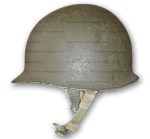
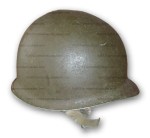
Bale Paratrooper Helmet Side View

M2 D Bale Paratrooper Helmet

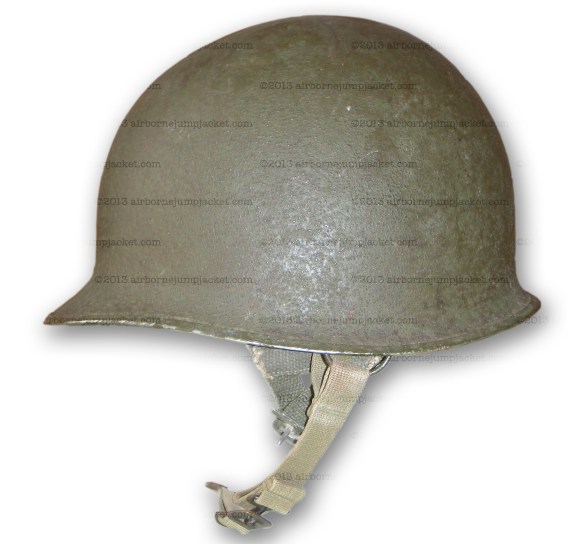
This original World War Two M2 D Bale Paratrooper helmet came from a  Company G, 506 PIR, 101st Airborne Division Veteran.   The Veteran received this helmet during WW2, after his previous helmet had been shot off his head by a German soldier.  He wore that helmet, with the bullet hole still in it, for awhile but was later forced to turn it in and replace it with this helmet and liner, because his First Sergeant deemed a helmet with a bullet hole as unsafe.

The M2 helmet is referred to by collectors by many several names today.  In addition to M2 and D Bale, you will hear it also referred to as a C Loop or D Bail. They are a highly desired piece of militaria today.  Since they are in high demand and are fairly hard to find, they are one of the most heavily faked and/or recreated items of US WWII militaria today.

This M2 D Bale helmet exhibits all of the classic features you like to see in an original D Bale.  It has a low heat stamp number, the male snaps that snap into the liner are chromed, and it additionally has the little single indentations on the rim of the helmet, in between the bales, that these original helmets often have.   Also, the size, shape, and construction of the bales, and the feet of the bales, is correct.  The liner is a WWII correct Westinghouse paratrooper liner and was in the helmet when it was purchased from the Veteran.

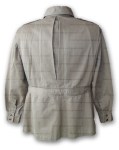
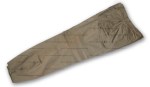
Airborne Paratrooper M41 Jump Suit with M41 Jump Jacket and M41 Jump Pants

M41 Paratrooper Jump Jacket Front

M41 Paratrooper Jump Jacket Front

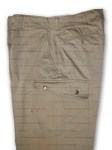
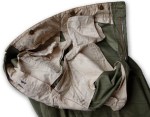
The M41 airborne jump suit was the predecessor of the more widely used (during WW2) M42 jump suit.  The M41 jump jackets and jump pants were made for a brief time in 1941, before it was decided that changes needed to be made to the paratrooper jump suit.  These changes were them incorporated into the M42 jump suit.

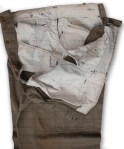
The biggest difference between the M41 and M42 jump suits were the pockets.  The M41 pockets were sewn flat on to the jacket and pants.  This did not allow much to be put in them.  It was decided that they should be expandable, much like the pockets seen on modern cargo pants/shorts, and that change was implemented on the M42 suit.  Also, the pockets on the M41 jump jacket each only had one snap to close them.  It was decided that was not enough and when the M42 suit went into production, there were two snaps on each jacket pocket.

There were some other minor changes.  For example, the side zippers at the bottom of each pants leg were deemed not necessary and were dropped from the M42 jump pants.  Also, the M41 jacket belt was sewn directly on to the jacket on the back and had a button snap on the end, while the M42 belt was only sewn on to the jacket by a small piece of fabric and replaced the button snap with a fabric loop.

Although all collectors, myself included, have a tendency to over use the term rare, the M41 jump suit is extremely hard to find and I think would appropriately be classified as rare.  There are only a handful of complete M41 jump suits in private collections today.  Since it was only issued for brief amount of time and at this time the US airborne forces were small, there were not many of them made.  Additionally, paratroopers that were issued them did sometimes continue to wear them throughout WWII, which resulted in many of them being used up.  Although the jump suit was replaced by the M43 suit in 1944, paratroopers were occasionally photographed wearing both the M41 and M42 jump jackets and/or jump pants throughout the War.

This particular suit belonged to an early member of the US Airborne forces that later became a member of the 517th PIR during World War Two. In addition to this suit, he brought back many other nice early airborne items including an early paratrooper training helmet and early paratrooper hawley liner.  I also own those items and they will be the subjects of later posts.

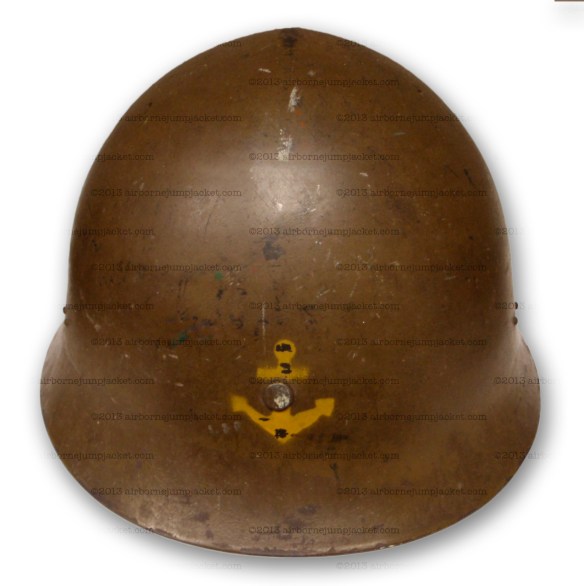
WWII Japanese Navy Special Naval Landing Forces SNLF Helmet

Japanese Navy Helmet Front View

WW2 Japanese Navy Helmet Front View
This WW2 Japanese Navy helmet is a type that is most often associated today with being worn by the Japanese Special Naval Landing Forces (SNLF) during the war.  They were also worn by other members of the Imperial Japanese Navy (IJN) during WWII.

Although they were not a separate branch of service like the US Marines were, the SNLF was roughly the Japanese equivalent of the USMC.  They were members of the Imperial Japanese Navy that were trained and equipped for fighting on land.  Members of the Special Naval Landing Forces were stationed on a number of the islands that US forces invaded during World War Two.

This particular helmet, with the navy anchor painted on the front, is the later style of the Japanese Navy helmet.  This style was produced approximately in the 1943-1945 period.  The previous version of the navy helmet had a metal anchor device that was affixed to the front of the helmet.

This helmet also has the correct navy style of liner and chinstraps, and they are original to this helmet.  The chinstraps are the thinner type that are sometimes seen on these later navy helmets.

I have always really liked WW2 Japanese helmets because I think they have a great look and they often will have interesting Veteran capture/bring back history.  I am always interested in adding nice WWII Japanese helmets, that still have their liners, to my collection.  I am especially looking for helmets that have original covers and/or nets, capture history, or battle damage.  If you have an original WWII Japanese helmet you are interested in selling, please click on my war souvenirs wanted page to find out how to email me.  I am also always interested in high quality original WWII Japanese Army and Navy uniforms, field gear, and swords.  I would love to hear what you have.

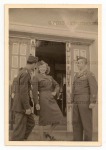
Marlene Dietrich WW2 Autograph and Unpublished Photos of Her with General James Gavin and Paratroopers of the 82nd Airborne Division

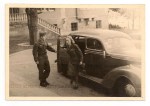
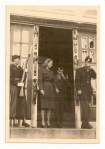
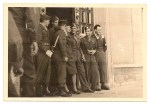
Dietrich 9 watermarkWe have here a Marlene Dietrich autograph given to a member of the 17th Airborne Division during World War Two and photos of her with General James Gavin and paratroopers of the 82nd Airborne Division.

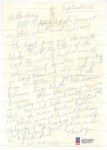
The autograph was given to a member of the 17th Airborne Division while she was visiting that unit.  Marlene spent much of WWII visiting troops overseas and putting on shows.  This soldier was able to get an autograph from her.  He also wrote in the pictured letter about Marlene visiting.

Marlene was most famous for starring in movies like The Blue Angel, A Foreign Affair, and Judgment at Nuremberg.  One of the other things Marlene was known for was playing a large lumber saw as a musical instrument.  According to a book about Dietrich memorabilia, Marlene Dietrich: Photographs and Memories, she had cards depicting her playing the saw, printed in notepad format for autographs.  When an autograph was requested, she would sign the card and tear it off the pad.  This book has a photo of one of these autograph card pads.

The photos of Marlene pictured where taken by a different airborne trooper soon after the war ended.  They were found amongst his mementos from the war.  He was a member of the 82nd Airborne Division and was able to take these snapshot photos when Marlene Dietrich came to visit the commander of the 82nd Airborne Division, General James Gavin, at the 82nd Airborne headquarters.   I have seen one photo in a book that was taken during this visit by Marlene, but I don’t believe any of the photos shown here have ever been published before.  General Jim Gavin and Marlene Dietrich were very close friends and Dietrich was a frequent visitor to 82nd Airborne Division during wartime and the occupation period.

WWII 319th Glider Field Artillery Battalion, 82nd Airborne Division, Ike Jacket Uniform Grouping

319th GFA Grouping

319th Glider Field Artillery Battalion, 82nd Airborne Division, Uniform Grouping

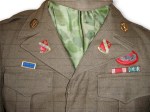
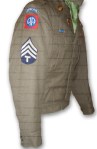
This World War Two 82nd Airborne Division uniform grouping belonged to a member of the 319th Glider Field Artillery Battalion.  It was purchased from him in the late 1980s.  He was with the 319th GFAB through all of its campaigns during WWII.  This Veteran, and the 319th GFAB, first saw action while supporting Darby’s Rangers during the invasion of Italy in September 1943.  Darby had picked the 319th GFAB to be the artillery support for his Rangers during the invasion of Italy.  The 319th GFAB saw heavy action during this campaign.

He next saw action when the 319th GFAB was landed in Normandy via gliders on D-Day, June 6, 1944.  The 319th GFAB again saw heavy action during the Normandy campaign.  The next campaign for this Veteran was Market Garden, the invasion of Holland.  This was followed by more heavy fighting during the Battle of the Bulge.  The 319th GFAB continued to deliver artillery fire against the Germans as the 82nd Airborne Division pushed into Germany, in the closing months of the War.

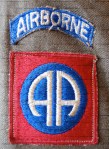
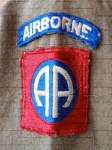
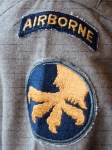
This grouping consists of his Ike jacket, his wool shirt, overseas cap, and some letters and documents.  After the end of the War, he spent a brief amount of time assigned to the 17th Airborne Division before being sent home.  This is the reason his shirt and Ike jacket have the 17th Airborne Division patch on the left sleeve.  His Ike jacket has the 82nd Airborne Division patch on the right sleeve indicating combat with that former unit.

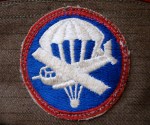
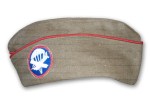
His Ike jacket has the pin back, distinctive unit insignia, of the 319th Glider Field Artillery Battalion on the collar.  The red oval behind his glider rider wings indicates airborne artillery.  His overseas cap has the red piping used by artillery units and the cap disc is the style used by both paratroopers and glider towards the end of the War.  The ribbon bar is British made and has the arrowhead indicating participation in an invasion.  The final picture is of a letter that the Veteran included when he sold the grouping.

WWII USMC Purple Heart and Bronze Star Medal Grouping to a Former Marine Raider Wounded On Iwo Jima

WW2 USMC and USN Style of Purple Heart and Bronze Star Medal

WW2 USMC Medal Grouping to a Former Marine Raider Wounded on Iwo Jima

This World War Two USMC Purple Heart and Bronze Star medal grouping belonged to a Marine who had been a Raider, but later transferred to the Ninth Marine Regiment, Third Marine Division.  While with the 3rd Marine Division, he was wounded during the fighting on Iwo Jima.

Both the Purple Heart and Bronze Star Medal are one of the correct styles, for these medals, that the Marines and Navy used during World War Two.  The two cases are also the one of the correct styles used by the USMC and USN during the War.

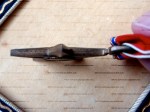
The letter discussing the awarding of the Purple Heart and also the deformed bullet, were both found inside the Purple Heart case.  I have had many groupings over the years, were Veterans kept the bullet or piece of shrapnel that wounded them as a souvenir.  I am guessing that this is the case with this bullet, but unfortunately have no other information regarding the bullet.

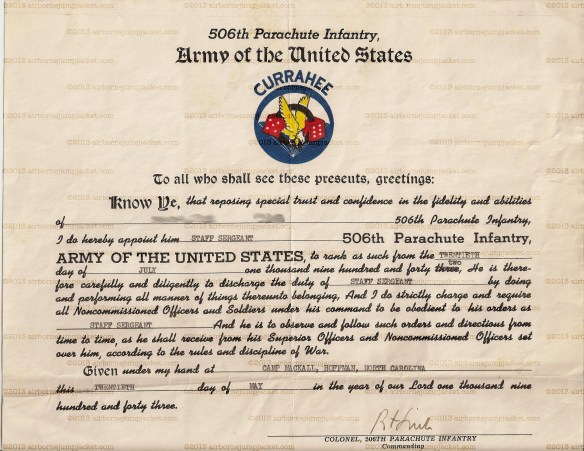
WW2 506th PIR Promotion Document signed by Colonel Robert Sink

506th Parachute Infantry Regiment Promotion Document

506th Parachute Infantry Regiment Promotion Document

This original WWII 506th Parachute Infantry Regiment promotion document was given to a member of C Company, 506th PIR.  It is part of a larger group that I own from that Veteran.  Please note that we have blurred the Veterans name in the photo for privacy.

These documents were printed by this regiment to be given to their paratroopers when promoted.  It is signed by Colonel Robert Sink, the famed commander of the 506th P.I.R. throughout the war.  Col. Robert Sink was portrayed by the actor Dale Dye, in the HBO’s miniseries The Band of Brothers.

These documents are fairly hard to find today.  Because they are hard to find and they are signed by Colonel Robert Sink, they usually are very pricey when they do surface.

WW2 506th Parachute Infantry Regiment Ovals and Jump Wings on 101st Airborne Paratrooper Uniforms

506th PIR Oval and Jump Wings on a G Company, 506 PIR Uniform

506th PIR Oval and Jump Wings on a G Company, 506 PIR Uniform

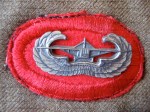
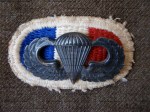
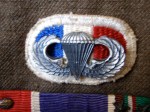
These original WWII 506th PIR ovals and jump wings are on uniforms that belonged to two different 506th PIR paratroopers.  This style of 506th PIR oval is the type most commonly found on WWII 506th uniforms and in groupings.

The first oval and jump wings are on a uniform that belonged to a member of Company G, 506th PIR.  The jump wings are sterling pin back wings.

The second oval and jump wings are on a uniform that belonged to a member of Company C, 506th PIR.  The jump wings are also sterling pin back wings.

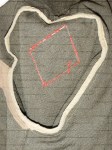
The final two photos show another original WW2 506th PIR oval that is not on a uniform.  The photo of the back of the oval, shows what you want to look for on the back of these original World War Two 506 ovals.

WW2 First Marine Division Australian Made Uniform Jacket with Theater Made Patch

1st Marine Division Australian Made Jacket Front

1st Marine Division Australian Made Jacket Front

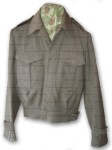
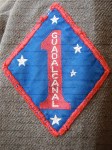
This World War Two Australian made battle dress uniform jacket belonged to a member of the 11th Marine Regiment, 1st Marine Division who participated in the battles on Guadalcanal, New Britain, and Peleliu.  These Aussie made jackets were very popular with members of the First Marine Division early in the war, because they were not able to obtain US made dress uniforms.
This jacket also has a theater made First Marine Division patch sewn on the right arm.  Although the US Marines normally only wore divisional patches on the left arm during WW2, period photos of these Australian made jackets being worn by members of the First Marine Division, often show the divisional patch being worn instead on the right arm.  Also, many of the surviving Aussie made First Marine Division jackets that I have examined have the patch on the right arm.
I own several of these Australian made jackets in documented groups and only one has the First Marine Division patch on the left arm, the others all have the patch on the right arm.  Interestingly, all of these groups have other patched uniform items that are later issue and are US made.  On all of the other later issue uniform items in these groups, the First Marine Division patch is on the left arm.  Period photos also reflect this trend of the divisional patch migrating from the right arm to the more conventional left arm as the members of the First Marine Division transitioned from wearing the Australian made battle dress to the US made USMC uniform.

This particular uniform also exhibits two other common traits seen on these Aussie made uniforms when worn by members of the First Marine Division.  First, although theater made EGAs (Eagle, Globe, and Anchor insignia) existed, they were often worn without EGAs. Second, these theater made jackets normally also have theater made First Marine Division patches on them.

WW2 US Mountain Troop and First Special Service Force Uniform Pants

WW2 Mountain Troop Pants

WW2 Mountain Troop Pants

This style of US Mountain Troop uniform pants was worn by members of both the 10th Mountain Division and the First Special Service Force during World War Two.  This particular pair belonged to a member of the First Special Service Force.

This style of pants is prized by collectors today, because of their association with these two famous units.  This pair exhibits a couple of things you do not often see in this type of pants.  First, they are a really big size.  They have a 40 inch waist.  Second, they are in excellent shape and look they were worn only a couple of times.  Most of these pants that are found today, show extensive use and damage.